Source Mildew Proof Mechanical Palletizer for Beverage, Food, and Logistics
Compare 30 mildew proof mechanical palletizer options from verified Chinese manufacturers. These automatic stacking machines handle cartons, bottles, and barrels with capacities up to 400 per minute and feature rustproof packaging for export; compare the available evidence and request quotations based on your requirements.
Key considerations
Products List


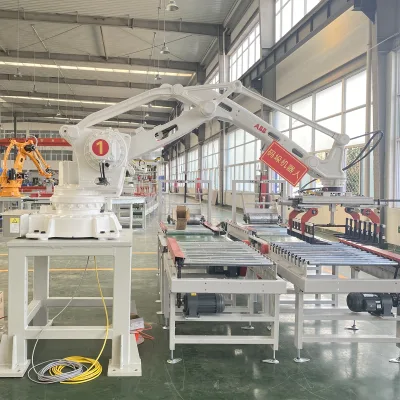
High Efficiency Automatic Palletizing Machine
$10000.00 - $30000.00
Moq: 1
LIAONING XINLAI INTELLIGENT EQUIPMENT MANUFACTURING CO LIMITED




Comprehensive Sourcing Guide
Mildew Proof Mechanical Palletizer Sourcing Guide
Buyers seeking mildew-proof mechanical palletizers must prioritize equipment designed for high-humidity environments where moisture resistance is critical for operational longevity. The observed market data indicates a strong presence of automatic stacking machines originating from major Chinese manufacturing hubs like Shanghai and Zhengzhou, which often feature robust plastic packaging materials to protect internal components during transit. These units are frequently engineered with rigid packages and rustproof packaging technologies, ensuring that the machinery arrives in optimal condition regardless of the shipping route or storage duration.
When evaluating listings, procurement teams should note that capacity varies significantly, with some models offering speeds up to 400 pieces per minute while others operate at 0 to 30 cases per minute. This variance suggests that the "mildew-proof" attribute is often tied to specific environmental sealing and material selection rather than a universal standard across all automatic grades. Buyers must verify if the specific model's electrical and mechanical systems are rated for the intended humidity levels, as the core components like bearings and servo drives require protection against corrosion to maintain the 12-month or 1-year after-sales service warranties typically offered.
Product Scope and Observed Listing Signals
The current product landscape includes diverse automatic stacking solutions ranging from multi-layer palletizers to specialized robotic arms with four-axis degrees of freedom. Listings reveal that these machines are often customized for specific applications such as beverage, wine, food, oil, and pharmaceutical logistics, where preventing product spoilage is as important as preventing machine degradation. The observed models, identified by codes like LW, FM-CPM, and KW series, demonstrate that manufacturers offer varying levels of automation, from continuous path control systems to standard electric-driven units, all aimed at handling carton boxes and shrink-wrapped cases efficiently.
Procurement signals indicate that packaging types for the machinery itself can range from wooden cases to standard cartons, with some units explicitly designed for export packaging of bottles, cans, and barrels. Buyers should scrutinize the "circulation function" and "mode of operation" details, as these often dictate whether the machine is suitable for continuous high-volume packing or intermittent loading tasks. The presence of video outgoing-inspection services suggests a market trend toward transparency, allowing buyers to visually verify the condition of the machine before shipment, which is a critical step when sourcing equipment intended for moisture-sensitive environments.
Technical Specifications to Verify
Technical due diligence must focus on the maximum stack height and tray dimensions, as these physical constraints directly impact the machine's ability to handle large pallets in humid warehouses. Observed specifications show a maximum stack height of 1900mm and tray sizes up to 1200 by 1200mm, which are standard for heavy-duty industrial applications. However, buyers must confirm that the specific mildew-proof coating or sealing on these structural elements is sufficient for their local climate, as the standard rigid package description does not guarantee resistance to prolonged exposure to high humidity or salt air.
The power consumption and weight of the unit are also critical verification points, with observed models ranging from 7.2kw power ratings to weights of 1500kg. For robotic applications, position repetition accuracy is a key metric, with some units achieving 0.05mm precision while others operate at 0.2mm. Buyers should ensure that the core components, including motors, gearboxes, and PLCs, are housed in enclosures that meet the necessary IP ratings for moisture protection. The maximum handling weight of 30kg for certain robotic arms versus the heavier capacity of palletizers requires a clear distinction in the procurement specification to avoid under-specifying the equipment for the intended load.
Compliance and Safety Documentation
Compliance verification is essential when sourcing industrial automation, particularly regarding certifications like ISO and CE, which are frequently listed for these Chinese-manufactured units. These certifications indicate that the electrical and mechanical safety standards have been reviewed, but buyers must explicitly request documentation confirming that the mildew-proof features meet specific environmental safety regulations for their region. The presence of a 12-month or 1-year after-sales service agreement is a standard commercial term, yet the scope of this service regarding corrosion repair or component replacement in humid conditions should be clearly defined in the contract.
Safety documentation must also address the operational modes of the machine, such as the continuous path control used in robotic systems or the automatic stacking logic of palletizers. Buyers should verify that the machine's control systems include fail-safes for power fluctuations and that the emergency stop mechanisms are accessible and functional even in wet conditions. The standard packing dimensions, such as 2400 by 1200 by 2800mm for certain models, must be cross-referenced with the facility's loading bay dimensions to ensure safe installation and operation without compromising the safety protocols required for heavy machinery handling.
Cost Drivers and Commercial Terms
Cost structures for mildew-proof mechanical palletizers are heavily influenced by the level of customization and the complexity of the core components integrated into the system. The observed price range of 500 to 199,999 USD reflects a vast spectrum from basic electric units to highly specialized, multi-axis robotic systems with advanced PLCs and servo drives. Buyers should anticipate that the "competitive price" selling point often correlates with standard configurations, while specialized moisture-resistant coatings, custom tray sizes, and higher precision accuracy will command a premium price point.
Commercial terms regarding the minimum order quantity (MOQ) appear to be flexible, with observed values as low as 1 unit, allowing for single-unit procurement for pilot testing or small-scale operations. However, the lead time and shipping logistics for heavy machinery, which can weigh up to 220kg or 1150kg depending on the model, must be factored into the total cost of ownership. Buyers should negotiate clear terms for the "wooden case" or "standard packing" to ensure that the protective packaging is robust enough to prevent moisture damage during transit, as this is a critical factor in maintaining the machine's condition upon arrival.
Supplier Qualification and Quality Control
Supplier qualification requires a rigorous assessment of the manufacturer's origin and their track record in producing equipment for specific industries like automotive, pharmaceutical, and food and beverage. The observed data points to suppliers in Shanghai, Zhengzhou, and Shandong, each with distinct capabilities ranging from general automatic stacking to specialized robotic handling. Buyers should verify the supplier's ability to provide video outgoing-inspection and request detailed test results for the core components, such as the bearing and motor durability under high-humidity stress conditions.
Quality control processes must extend beyond the final assembly to include the sourcing of raw materials and the application of protective coatings. The "customized" standard mentioned in the listings suggests that suppliers are willing to adapt the machine's design, but buyers must ensure that these customizations do not compromise the structural integrity or the mildew-proof properties of the unit. A robust quality control plan should include pre-shipment inspections that specifically test the sealing of electrical compartments and the corrosion resistance of the mechanical frame, ensuring that the machine meets the rigorous demands of the intended application field.
Long-Term Procurement Checks
Long-term procurement success depends on establishing a clear maintenance protocol that addresses the specific challenges of operating in humid environments. Buyers should verify the availability of spare parts for critical components like the servo drive, gearbox, and PLC, ensuring that these parts are also treated with corrosion-resistant coatings. The observed 12-month or 1-year after-sales service period is a starting point, but procurement contracts should ideally include provisions for extended support and training on how to maintain the mildew-proof features of the machine over its operational lifespan.
Regular performance audits are necessary to ensure that the machine continues to meet the specified capacity and accuracy standards, such as the 0.05mm position repetition accuracy or the 400 pieces per minute throughput. Buyers should implement a schedule for inspecting the rustproof packaging and the internal seals of the machine, as these are the first lines of defense against moisture ingress. By maintaining a proactive approach to maintenance and keeping detailed records of service interventions, procurement teams can extend the operational life of the palletizer and protect their investment against the degrading effects of humidity.
FAQs
What is the maximum stacking height for this automatic palletizer?
The maximum stack height is 1900mm, allowing for efficient vertical storage of palletized goods. This capacity supports standard export packaging requirements and ensures stable stacking for various product types. The rigid package design further enhances stability during the automatic stacking process, making it suitable for high-volume operations.
Can the machine handle different packaging materials like plastic or cartons?
Yes, the machine supports plastic packaging materials and handles cartons, cans, bottles, barrels, and stand-up pouches. Its versatile design accommodates diverse product forms, including carton boxes and PE film shrink packages. This flexibility ensures effective handling across multiple industries such as beverage, food, and oil packaging applications.
What is the production capacity per minute for this palletizing system?
The system operates at a capacity of 400 pieces per minute, ensuring high-speed efficiency. Additionally, it can process 0 to 30 cases per minute depending on the specific configuration. This dual capacity range allows for adaptable performance, meeting varying production demands while maintaining consistent output rates for automated packaging lines.
Which core components ensure the reliability of this automatic stacking machine?
The machine utilizes high-quality bearings, motors, gears, PLCs, gearboxes, and servo drives as core components. These elements work together to provide precise control and durable performance. The electric driven type ensures smooth operation, while the new condition of the equipment guarantees immediate readiness for industrial deployment without extensive break-in periods.
What after-sales service is provided for this palletizer model?
A 12-month after-sales service is provided, ensuring long-term operational support. Video outgoing inspections are also available to verify machine condition before shipment. This comprehensive support package helps buyers maintain productivity and addresses potential technical issues promptly, ensuring the automatic stacking machine remains reliable throughout its initial operational lifecycle.
Where is this automatic palletizer manufactured and what is the origin?
The machine originates from Shanghai, China, and Zhengzhou City, China, depending on the specific model. Some variants are produced in Tai'an, Feicheng, Shandong. These locations are known for industrial manufacturing excellence, ensuring that the automatic stacking equipment meets rigorous quality standards and is ready for global export packaging applications.